
Hiring a new employee comes with a long checklist of responsibilities — and sitting right at the top of that list is the Form I-9. Whether you are a small business owner, an HR manager, or an individual just starting a new job, understanding I-9 verification requirements is absolutely critical. Failing to comply with these federal rules can result in serious penalties, audits, and legal consequences that no business wants to face.
What Is I-9 Verification?
Form I-9, officially called the Employment Eligibility Verification form, is a document required by the U.S. Citizenship and Immigration Services (USCIS). Its purpose is straightforward: to confirm that every person hired for employment in the United States is legally authorized to work here.
Every employer in the United States — regardless of company size, industry, or number of employees — is legally required to complete an I-9 for each new hire. This includes citizens, lawful permanent residents, and non-citizens alike. No one is exempt.
The form itself is divided into three sections, each with its own responsibilities and deadlines. Understanding each section is key to meeting your I-9 verification requirements correctly and on time.
Why I-9 Compliance Matters More Than You Think
Many employers treat the I-9 as a simple formality — a quick paper to sign on the first day and then forget about. That mindset is a costly mistake.
The U.S. Department of Homeland Security (DHS) and the U.S. Immigration and Customs Enforcement (ICE) conduct regular audits of employer I-9 records. Violations — even technical ones — can result in fines ranging from hundreds to tens of thousands of dollars per form. Repeated or willful violations carry even steeper consequences, including criminal charges.
Beyond the financial risk, non-compliance can damage your company’s reputation and create significant disruptions to your workforce. The good news is that staying compliant is entirely manageable when you understand what is required from day one.
The 5 Core I-9 Verification Requirements
1. Completion of Section 1 by the Employee — On or Before the First Day of Work
The first major I-9 verification requirement falls on the new employee, not the employer. Section 1 of the Form I-9 must be completed by the employee on their first day of work — or any time before that, but never before they have accepted the job offer.
In Section 1, the employee provides personal information including their full legal name, date of birth, address, and Social Security Number (if applicable). They also attest to their immigration status, selecting one of the following categories:
A citizen of the United States, a noncitizen national of the United States, a lawful permanent resident, or an alien authorized to work until a specific expiration date.
The employee must sign and date Section 1 themselves. If the employee needs a preparer or translator to help them complete this section, that person must also sign a separate certification within Section 1. This is a commonly overlooked step that leads to technical violations during audits.
2. Employer Completion of Section 2 — Within 3 Business Days of the First Day of Work
Once the employee has completed Section 1, the responsibility shifts to the employer. Section 2 requires the employer — or an authorized representative — to physically examine the employee’s identity and work authorization documents and record information from those documents on the form.
This step must be completed within 3 business days of the employee’s first day of employment. If the employee is only hired for 3 days or fewer, Section 2 must be completed by the end of the first day.
This is where many employers run into trouble. The document review must be done in person — the employer or authorized representative must physically examine the original documents. Photocopies and faxed copies are not acceptable for verification purposes.
This is also one of the most common reasons businesses use a mobile notary or authorized I-9 agent, especially for remote employees. A trusted third-party representative can physically meet the employee and complete the document review on the employer’s behalf — a service that PAC Signing proudly provides across Oregon and Washington.
3. Acceptable I-9 Documents — List A, List B, and List C
One of the most important aspects of I-9 verification requirements is knowing which documents are acceptable. The USCIS provides employees with three lists of acceptable documents:
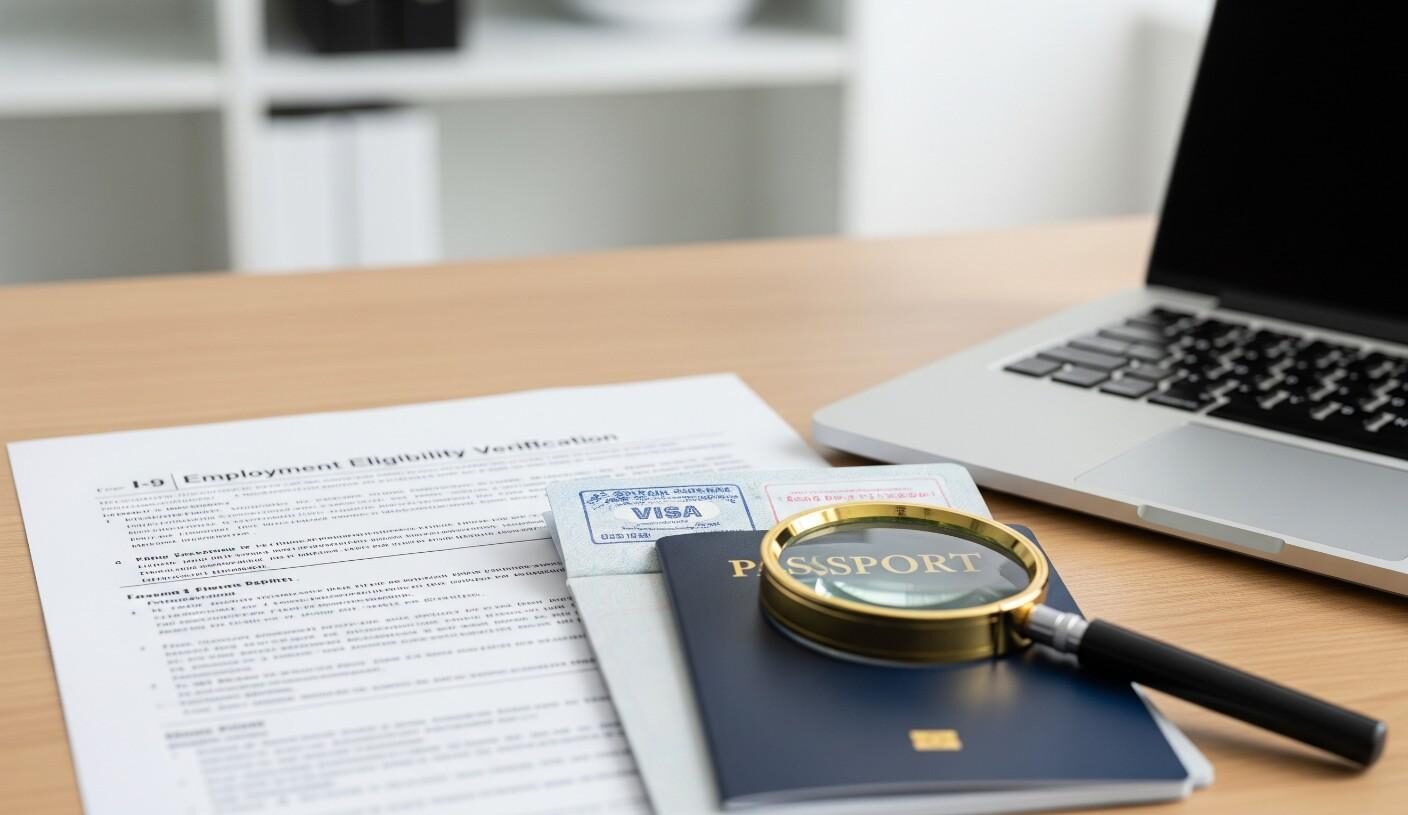
List A — Documents That Establish Both Identity and Work Authorization: These documents satisfy both requirements on their own. An employee who presents a List A document does not need to provide any additional documents. Common List A documents include a U.S. Passport or U.S. Passport Card, a Permanent Resident Card (Green Card), an Employment Authorization Document (EAD) issued by USCIS, a foreign passport with a temporary I-551 stamp, and certain other immigration documents.
List B — Documents That Establish Identity Only: If an employee does not have a List A document, they must present one document from List B and one from List C. Common List B documents include a state-issued driver’s license, a state or local ID card with a photograph, a school ID card with a photograph, a voter registration card, and a U.S. military card or draft record.
List C — Documents That Establish Work Authorization Only: When paired with a List B document, List C documents complete the verification. Common examples include a Social Security card (unrestricted), a Certification of Birth Abroad issued by the Department of State, a U.S. birth certificate, and a Native American tribal document.
The employer must record the document title, issuing authority, document number, and expiration date in Section 2. Importantly, employers cannot tell employees which specific documents to present — they may only inform employees that they need to choose from the acceptable lists. Requesting specific documents beyond what is required may constitute discrimination under the Immigration and Nationality Act (INA).
4. Re-Verification for Employees With Temporary Work Authorization
One of the most important I-9 verification requirements that employers often overlook involves employees whose work authorization is not permanent — meaning it carries an expiration date. When that date approaches, employers are required to re-verify the employee’s continued work eligibility. This is done in Section 3 of the Form I-9.
Re-verification must occur on or before the expiration date of the employee’s work authorization. Allowing an employee to continue working beyond their authorization expiration without re-verification is a serious compliance violation — and one that auditors look for closely when reviewing whether a business has met all I-9 verification requirements.
To stay ahead of this obligation, employers should set internal calendar reminders at least 90 days before an employee’s work authorization expires. This gives both the employer and the employee enough time to gather and present updated documentation without any last-minute scrambling.
It is important to note, however, that not every employee is subject to this particular step within the I-9 verification requirements. Re-verification is not required for U.S. citizens or lawful permanent residents whose green card has expired — the Green Card itself may expire, but the resident’s underlying work authorization does not. Knowing this distinction helps employers avoid unnecessary re-verification requests that could be seen as discriminatory under federal law.
5. Proper Storage, Retention, and Availability of I-9 Records
Completing the I-9 is only half the battle when it comes to meeting full I-9 verification requirements. Employers must also properly store and retain completed I-9 forms for a legally mandated period of time.
The retention rule is straightforward: employers must keep each employee’s I-9 for either 3 years after the date of hire or 1 year after the date employment ends — whichever is later.
I-9 forms must be stored separately from general personnel files. They must also be made available for inspection by authorized government officials — including ICE, the Department of Labor, and the Department of Justice — within 3 business days of a request.
Employers may store I-9 forms on paper, on microfilm or microfiche, or electronically — as long as the electronic storage system meets DHS standards for accuracy, reliability, and security. Proper recordkeeping is not an afterthought — it is a core part of I-9 verification requirements that every employer must get right.
Keeping organized, audit-ready I-9 records is one of the most overlooked aspects of I-9 verification requirements, and it is where many businesses fall short when an audit arrives unexpectedly.
Remote Employees and I-9 Verification — A Modern Challenge
One of the most pressing issues facing employers today is how to handle I-9 verification requirements for remote employees. The physical in-person document review requirement does not disappear just because an employee works from home.
Employers have two primary options for meeting I-9 verification requirements during remote onboarding. The first is to use an authorized representative — any person designated by the employer — to physically meet the employee and review their documents. The second option, introduced as a permanent alternative by DHS in 2024, is to use an E-Verify employer agent who participates in the Alternative Procedure, which allows document review via live video interaction under specific conditions.
For businesses in Oregon and Washington, PAC Signing offers professional I-9 document verification services through mobile notary representatives who travel directly to your employee’s location. This ensures full compliance without requiring your HR team to be physically present — a practical, efficient, and fully compliant solution for today’s remote and hybrid workforce.
What Is E-Verify and Is It Required?
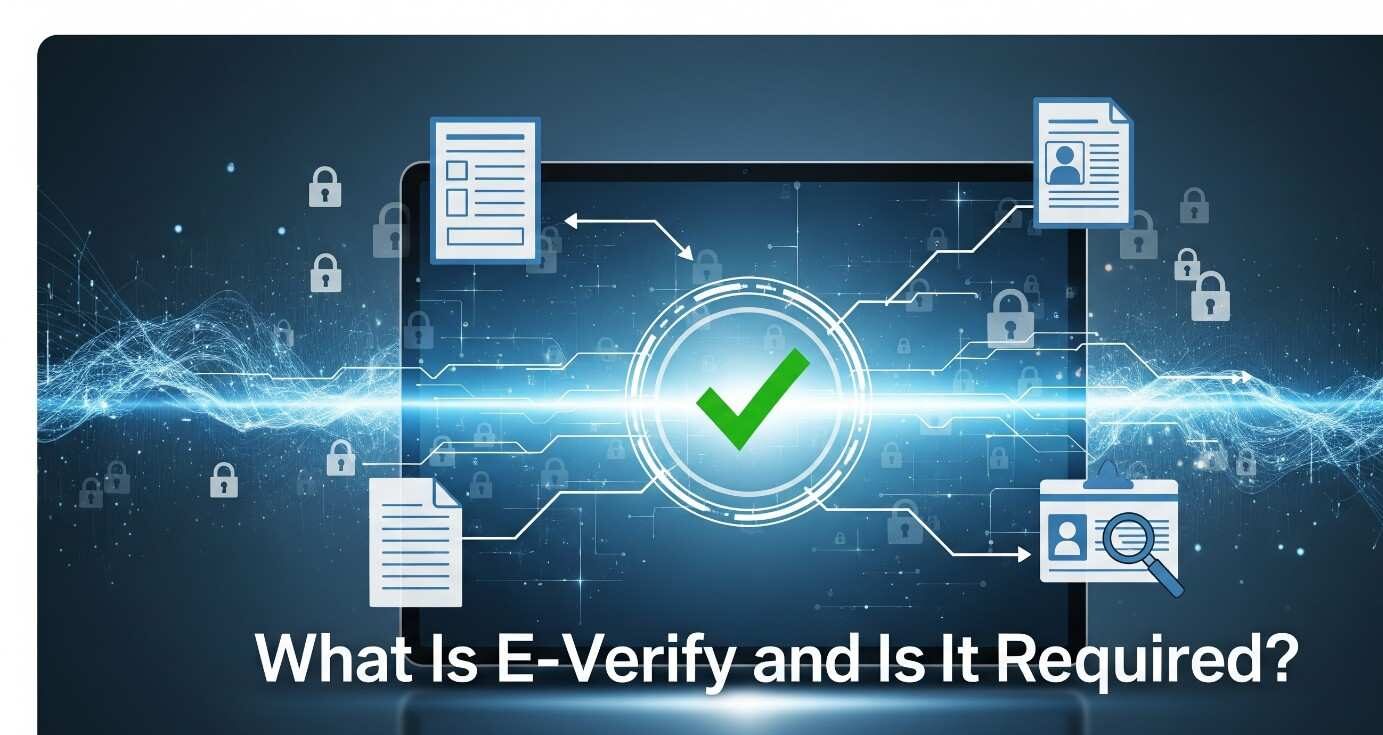
E-Verify is an online system operated by the Department of Homeland Security that allows employers to electronically verify an employee’s work eligibility by comparing Form I-9 information against government records — serving as a powerful companion to standard I-9 verification requirements.
While E-Verify is not federally mandatory for most private employers, it is required for federal contractors and in certain states. In Oregon and Washington, specific industries and positions may trigger E-Verify requirements, so it is always wise to consult with a compliance professional or legal advisor to determine if E-Verify applies to your business.
Even when not required, many employers voluntarily use E-Verify as an added layer of protection and confidence in their overall I-9 verification requirements process.
Common I-9 Mistakes to Avoid
Understanding I-9 verification requirements also means knowing what not to do. Some of the most frequent errors include leaving required fields blank in any section, accepting expired documents, failing to complete Section 2 within the 3-business-day window, requesting more or different documents than required, and not re-verifying employees with expiring work authorization.
Even minor, technical mistakes — like a missing signature or an incorrect date — can result in fines during an audit. That is why many employers choose to work with experienced professionals who are trained in I-9 compliance to handle the process from start to finish.
How PAC Signing Can Help With I-9 Verification
At PAC Signing, we are a professional mobile notary signing and witness services company proudly serving Oregon and Washington. We understand that navigating I-9 verification requirements can feel overwhelming — especially for growing businesses managing remote teams.
Our trained mobile notary representatives serve as authorized I-9 agents, traveling directly to your employee’s location to conduct the in-person document review required by federal law. We help ensure every Section 2 is completed accurately, on time, and in full compliance — so you can hire with confidence and focus on what you do best.
Whether you need I-9 assistance for a single hire or ongoing support for your entire workforce, PAC Signing is here to make the process simple, professional, and completely stress-free.
📞 Ready to schedule your I-9 verification service? Visit us at www.pacsigning.com to learn more or book an appointment today.
Final Thoughts
The I-9 verification requirements laid out by USCIS are not optional — they are a federal mandate that every employer must take seriously. From the moment a new employee accepts a job offer to the day their records are retired, the I-9 process touches every part of the employment lifecycle. Staying on top of these I-9 verification requirements is not just about avoiding fines — it is about building a business that operates with integrity and legal confidence from the ground up.
By understanding the five core I-9 verification requirements — employee completion on day one, employer document review within three business days, acceptable document lists, re-verification for temporary workers, and proper record retention — you will be well-positioned to stay compliant, avoid costly penalties, and build a trustworthy, legally sound hiring process. Each of these steps plays a distinct role in ensuring your workforce is fully authorized and your business is fully protected.
And when you need a reliable partner to help you navigate every stage of the I-9 verification requirements — especially the in-person document review piece for remote employees — PAC Signing is just a call away. Our mobile notary representatives across Oregon and Washington are trained, professional, and ready to make your I-9 process seamless from start to finish.